




Ideas for small bathrooms with bathtubs - how to use mirrors and light to create space

A small bathroom with a bathtub can quickly become a space that seems narrow and dark, especially in apartment blocks or in homes where the surface does not allow for big compromises. Most of the time, the discomfort does not arise from the lack of square meters, but from the way mirrors, light and finishes are used. Heavy walls, ill-conceived lighting or wrong reflections can accentuate the feeling of crowding, even in a properly compartmentalized bathroom.
Discover how you can create the feeling of space and light in a small bathroom with a bathtub, using effective and easy-to-implement visual solutions!
Analyze the bathroom space and set visual goals!
The first step always starts with observation. Before you choose a LED mirror or a light fixture, looks at the bathroom exactly as it is now. Measure the dimensions, note the position of the tub, sink and door, then analyze how you move around the space on a daily basis. In most cases, small bathrooms with bathtubs have areas that appear narrower than they really are, due to shadows or misplaced objects.
The next thing worth doing is identifying which area you want to enhance through reflection. It can be a wall clad with open ceramic, an artificially lit portion or even the bathtub area, if the finishes are clean and tidy. The mirror amplifies what it reflects, so the choice of reflecting surface matters as much as the size of the mirror.
Also determine how you want to feel in the bathroom. For everyday use, many people prefer a neutral, clear light in the mirror area, complemented by a warmer light near the bath, which supports relaxation. These decisions help you choose both mirrors and light fixtures correctly without creating an incoherent mix of color temperatures or intensities.
Choose the right mirrors for small bathrooms with bathtubs!
In a small bathroom, the mirror can visually enlarge the space and distribute the light better. In most cases, a large, well-proportioned mirror provides stable and easy-to-control results.
The size of the mirror should follow the width of the sink or the furniture below it. A mirror that is too small fragments the wall and creates the feeling of disorder. Frameless or very thin frame models help maintain visual continuity, especially in bathrooms where every detail counts. If you want functionality, pleasant design and durability, opt for a LED mirror with defogger.
Shape influences the perception of space. A rectangular mirror, mounted horizontally, visually widens the wall and works well in narrow bathrooms. A vertical mirror can balance a lower ceiling, especially if complemented by vertically oriented lighting. For a depth effect, you can consider mirrors with "infinity" edges or with perimeter LED lighting, which create a bright and orderly outline.
Correct positioning of mirrors in a small bathroom with a bathtub and the effect of reflection
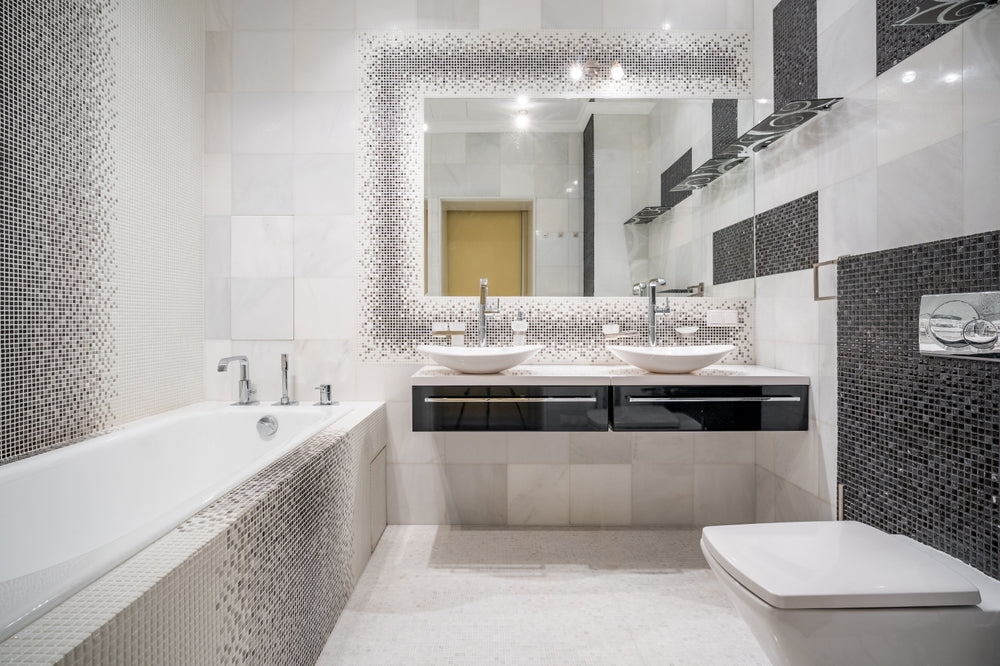
Even the best-chosen mirror loses its impact if it is mounted incorrectly. The position directly influences what is reflected and how you perceive the space. In a small bathroom with freestanding bathtub, the general recommendation is to mount the mirror so that it reflects light and clean surfaces, not cluttered areas.
Above the sink, align the mirror on the axis of the sink and keep a balanced distance from the counter. A mounting that is too high creates visual discomfort, and one that is too low shrinks the wall. For stable results, the mirror should be at eye level for most users.
In narrow bathrooms, a common solution is to place a mirror on the side wall, parallel to the bathtub. This placement adds depth and makes the space appear wider. The reflection of artificial light is distributed more evenly, and dark areas become less obvious.
If you choose an LED mirror, pay attention to the installation and power supply. Correct mounting ensures both safety and a clean appearance. See here how to properly install an LED mirror in the bathroom!
Plan layered lighting for a more airy bathroom!
Lighting from a single central point creates harsh shadows and accentuates the boundaries of the space. In small bathrooms with bathtubs, layered lighting gives better control over the atmosphere and supports the feeling of openness. This type of lighting involves the combination of several sources, each with a clear purpose.
The first layer is general lighting. oh LED ceiling light with a thin profile, mounted directly on the ceiling, it provides uniform light and does not load visually. For low ceilings, compact models work best.
The second layer is functional lighting, concentrated in the mirror area. Here you need clear light, without shadows on the face. The neutral color temperature helps with daily activities such as personal care or makeup.
The third layer adds atmosphere. It can be a discreet light in the bathtub area, under furniture or on a secondary wall. This layer does not dominate, but complements the overall picture and creates a nice transition between functional areas.
Mirror lighting – practical details that make the difference
Mirror lighting influences both visual comfort and the perception of space. In small bathrooms, this area deserves special attention, as it becomes the main point of interest. Avoid spotlights mounted directly above the mirror, as they create uneven shadows and accentuate wall boundaries.
For regular use, side-mounted sconces at face height provide balanced light. Another effective solution is LED mirror with cabinet, which also offers storage space. This variant works well in very small bathrooms, where every cm2 needs to be optimized.
For safe options suitable for wet environments, you can mount bathroom fixtures, as they are designed to withstand water vapors and splashes. The clean design and durable materials support a neat and easy-to-maintain look.
Also pay attention to the degree of IP protection! In the bathroom, lighting fixtures must be chosen according to the area where they are installed. Find out here what does IP20, IP21, IP40, IP65, etc. mean?!
The recommended color palette for a small bathroom with a bathtub and light-supporting materials
Colors and textures directly influence how you perceive the size of a bathroom. In small spaces, light shades reflect light and create continuity. Warm white, cream, light beige or very light gray are common choices for walls and ceramics.
Glossy or semi-gloss finishes work better than matte because they subtly reflect artificial light. Glossy ceramic tiles, used on walls or in the bathtub area, support the effect of mirrors and reduce the contrast between surfaces.
Reflective materials, such as glass or chrome metal accents, add light without overwhelming the space, if used sparingly. For consistent results, avoid strong contrasts between the floor and the walls. Color continuity creates what designers call "visual open space", that is, a perception of open space without obvious interruptions.
Storage solutions suitable for a small bathroom with a bathtub
In small bathrooms with bathtubs, storage directly influences the feeling of space. Objects in plain sight create visual noise, even if they are well organized. Bathroom furniture suspended, with simple lines and glossy fronts, helps maintain an airy appearance and frees up the floor.
Mirror cabinets combine storage with a visual increase in space. Deep and compartmentalized drawers allow you to store everyday products without cluttering up the worktop. For stable results, avoid excessive open shelves, especially in the central areas of the bathroom.
Integrated storage works well in less visible areas such as above the toilet or next to the bath. Vertical, narrow bodies, in the same color as the wall, integrate discreetly and do not fragment the space.
Small bathroom orientation for better flow
The disposition sanitary items influence the way you move in the bathroom. In a small space, the bathtub does not create problems if it is integrated correctly. As a rule, placing the bathtub on the long wall frees up the circulation area and makes the bathroom easier to use.
The sink and associated furniture should be aligned on the same axis, preferably on the wall opposite the tub. This organization creates a clear route and reduces the feeling of obstruction. Avoid furniture doors that open to the passage area and opt for drawers or sliding doors.
If space permits, a clear glass bathtub screen preserves visibility and lets light in. Clear glass works better than opaque curtains or screens with thick frames, which visually fragment the bathroom.
Final details and set-up examples for different budgets
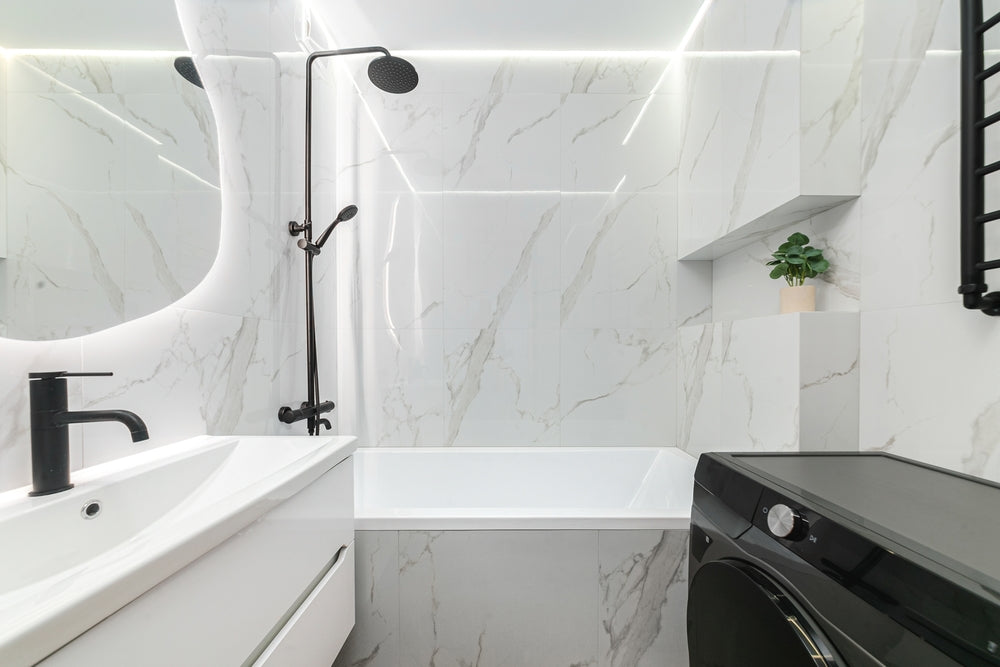
Details complete the big picture and can support the feeling of space, if chosen carefully. Bathroom accessories minimalist, in the same color palette, maintain visual coherence. A slim towel rail, a chrome-finish faucet or a simple dispenser contribute to a neat look.
Plants can also be integrated in small bathrooms, if you choose species that tolerate humidity. A small plant, placed on the furniture or next to the bathtub, adds freshness without burdening the space.
For different budgets, you can adapt the set-up:
- An average budget can include an LED mirror with defogging function and a simple LED ceiling light.
- A more generous budget allows for full tiered lighting, side sconces and premium furniture finishes.
Regardless of the budget, it keeps the visual and functional logic. Consistency matters more than the number of products used.
A small bathroom with a bathtub can appear larger and brighter if you use mirrors, lighting and finishes correctly. Analyze the space, set clear goals and plan each element before purchase. A well-positioned mirror, layered lighting and integrated storage change the way you perceive the bathroom day to day.
About the author