

Modern loft design - practical guide to lighting and design

Designing an attic always raises questions about light, proportions and comfort. Roof slopes, variable height and atypical windows completely change the rules compared to a standard floor. That's why this guide aims to help you approach the design of a modern loft in a clear and applied way, with an emphasis on lighting and well-thought-out interior design.
Whether you want to furnish a bedroom, an office or a bright open space, in this article you will find recommendations adaptable to different budgets and sizes.
Step 1 – Assess your attic space and actual limitations
Before any design decision, carefully analyze the attic. It measures the maximum height, but also the areas where the ceiling drops below 1.80 m. This information directly influences the positioning of the furniture, the circulation and the types of lighting fixtures that you can use.
Observe the path of natural light throughout the day. In most cases, skylights bring in a lot of light in the morning or midday, but can leave dark areas in the evening. For example, a north-facing attic will need a better structured artificial lighting plan than a south-facing one.
It divides the space into areas of frequent use and secondary areas. Under the low slopes you can integrate storage, shelves or ambient lighting. Areas with generous height remain suitable for a bed, desk, sofa or table.
Step 2 – Establishing the main function of the attic
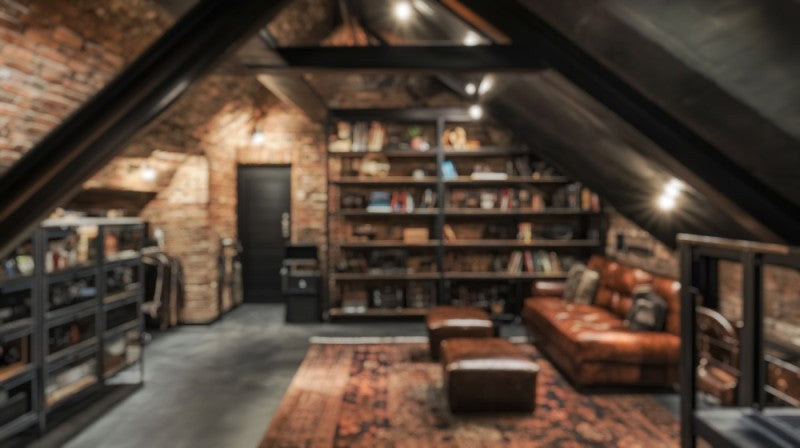
Design starts with use. A sleeping loft requires a calm atmosphere and controlled light. An office needs neutral and well-directed light. A living room or an open space allows more freedom in playing with light and composition. In one industrial design style, lighting fixtures with metallic finishes, exposed bulbs and simple lines complement the space without burdening it, emphasizing functionality and the rawness of the design.
If the attic houses several functions, set priorities. In an open space with a seating area and a desk, the lighting must support both activities without creating visual discomfort. This is where layered lighting comes in, explained below.
For regular use, avoid overly decorative solutions that affect functionality. For example, one chandelier spacious can look good in a living room with a high ceiling, but in a low attic it will confuse circulation and visually load the space.
Step 3 – Defining the interior design style of the loft
A clear style chosen from the beginning helps you avoid incoherent combinations. Modern attics lend themselves well Scandinavian styles, contemporary, minimalist or soft industrial. They emphasize light, simple lines and materials that are easy to integrate under slopes.
In a Scandinavian loft, light colors, natural wood and warm lighting create a balanced atmosphere. Industrial style works in lofts with exposed beams, metal and light fixtures with a simple design. For a sleek modern style, go for clean surfaces, understated metallic accents and LED chandeliers well integrated.
Choose the style before buying furniture or lighting fixtures. Thus, each element will support the same aesthetic direction, and the space will appear coherent and airy.
Step 4 – Compartmentalization of the attic without loss of light
In the attic, classic partitioning with opaque walls quickly reduces light and the feeling of space. That's why modern solutions favor visual and functional boundaries, not massive walls.
You can separate the areas with furniture, sliding glass doors or differences in finish. Lighting plays an important role at this stage. For example, the sleeping area can have warm, diffused light, and the work area neutral, concentrated light.
In small attics, the open space remains a practical choice. Delineate functions through carpets, positioning of lighting fixtures and variations of light intensity, without fragmenting the space.
Step 5 – Capitalizing on the natural lighting in the attic
Natural light supports any successful arrangement. Place the main furniture in well-lit areas. The desk by the window reduces the need for artificial light during the day, and the bed positioned perpendicular to the window provides visual comfort in the morning.
Control the light with roller shutters or blinds dedicated to attic windows. In the bedroom, opaque materials help to rest. In the living room or office, the semi-transparent versions filter the light without blocking it completely.
Watch out for reflections. Glossy surfaces can amplify light, but can create discomfort. Balance them with textiles, wood and matte finishes for stable results.
Step 6 – Plan artificial lighting in layers in the attic
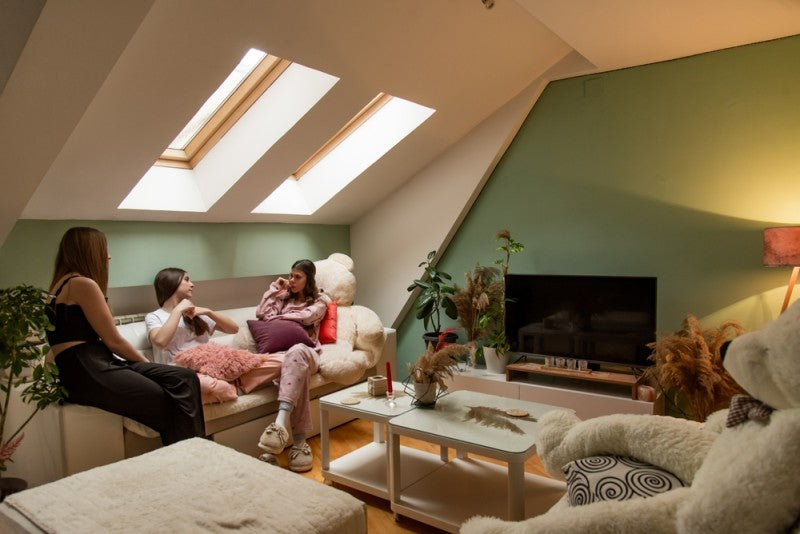
Layered lighting means combining three types of light: ambient, functional and accent. In the attic, this approach helps to compensate for differences in height and shaded areas.
Ambient light provides the base and ensures an even distribution. You get it through LED ceiling lights, LED wall lights, hidden LED strips or chandeliers with short suspension. Functional light supports daily activities such as reading or working at the desk. Accent lighting highlights beams, textured walls or decorative objects.
Color temperature influences the atmosphere. For relaxation, choose 2700–3000K. For focus, 4000K works better. It avoids the chaotic combination of temperatures in the same space.
Step 7 – Choosing the right lighting fixtures
In areas with low ceilings, LED ceiling lights provide efficient lighting without burdening the space. Modern models provide uniform light and easily integrate into the design. You can see suitable examples in the collection of LED ceiling lights.
For taller areas, short pendant chandeliers add personality. LED models allow you to adjust the intensity and, in some cases, the color temperature. Get inspired by the selection of LED chandeliers, suitable for living room or attic bedroom.
Under slopes, wall-mounted sconces provide side light and reduce shadows. They work well in the bedroom, hallway or office. You can find elegant options in the collection of apply.
Step 8 – Lighting on functional areas
The attic bedroom needs calm and controlled light. The sconces mounted above the nightstand free up space and provide comfort for reading. oh LED strip hidden behind the headboard adds a diffuse light, suitable for the evening.
The office requires directed light. A lamp with an adjustable arm and neutral light reduces eye strain. Complete with an ambient source for visual balance.
The living room or the relaxation area allows for combinations. A main source, sconces and accent lighting create an adaptable ambience. Dimmers help adjust the light depending on the time of day.
Step 9 – Materials, colors and finishes adapted to the attic
Light colors amplify the light and visually increase the space. Warm whites, beiges and light grays work well on large surfaces. You can introduce darker accents on the vertical walls, not the ceiling.
Wood brings balance and warmth. Exposed beams easily integrate into a modern design if you keep them in natural tones or close to the color of the ceiling. Metal and glass complete the contemporary aesthetic.
Avoid harsh contrasts between the ceiling and the walls. A uniform color palette makes the attic more coherent and brighter.
Step 10 – Loft furniture and under-slope storage
Made-to-order furniture makes the most of hard-to-reach areas. Sloping cabinets, low drawers and integrated shelves solve the problem of clutter-free storage.
Integrate lighting into furniture. LED strips under shelves or inside cabinets increase functionality and help orientation. These solutions fit well in dressing rooms or storage spaces.
Choose pieces with simple lines and correct proportions. Solid furniture accentuates the loft's limitations, while airy pieces support the modern design.
Step 11 – Safety, light sources and maintenance
In the attic, temperature and humidity variations can be more pronounced. Choose lighting fixtures with a degree of protection according to the area. For spaces exposed to condensation or dust, check IP specifications. You can find useful explanations in the article about protection against environmental factors – IP20, IP40, IP65.
Opt for quality LED sources. They better withstand temperature variations and reduce energy consumption. If you want to make an informed choice, consult the guide about types of bulbs.
Periodically clean light fixtures and check mounting, especially in hard-to-reach areas. Correct maintenance preserves the comfort and pleasant appearance of the attic in the long term.
Designing a modern loft starts from assessing the space and continues with a coherent lighting and interior design plan. Natural and artificial light must work together, supported by materials, colors and furniture adapted to the slopes.
If the project involves structural changes or complex installations, talk to an interior design or lighting specialist. You will get solutions adapted to your needs and available budget.
About the author