

Lighting trends for 2026: which lighting fixtures to choose

Lighting has become one of the first elements you analyze when furnishing or renovating a home. In 2026, the focus falls on well-thought-out choices that combine daily functionality, aesthetic appeal and efficient energy consumption. Light defines the way you perceive volumes, colors and textures, and a suitable selection can completely change the atmosphere of a room.
This guide helps you choose the right lighting fixtures for the coming year, taking into account interior design trends, the real needs of each space and the technical solutions available. You'll find practical recommendations, easy-to-adapt examples, and clear steps to make informed decisions, whether you're decorating an urban apartment or a spacious home.
Establishing the role of each room. Lighting for 2026 must support daily activities, not confuse them
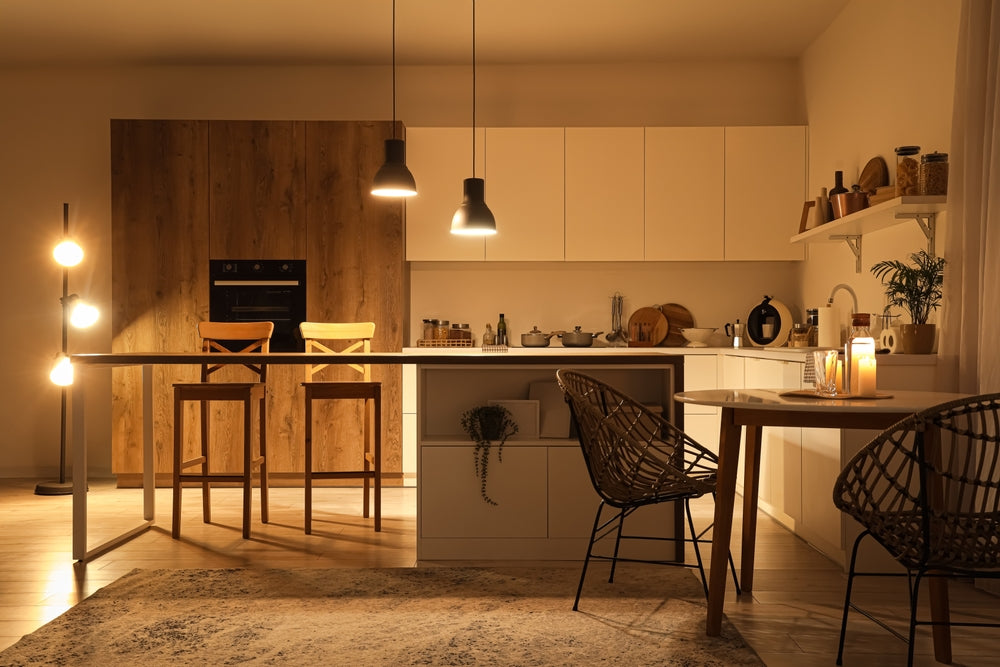
The first step is to clarify how you use each room. In the kitchen, light supports cooking and organization. In the living room, it creates a flexible setting for socializing, relaxing or reading. The bedroom requires a calm, easy-to-control light. For more recommendations, go to the Alessandro Design article about how to choose the right lighting fixtures for each room!
For regular use, a mix of general and accent lighting works well in the living room. You can mount a LED ceiling light with diffused light for even coverage and to add LED lamp next to the couch or armchair. This way you delimit the areas without visually fragmenting the space. The Alessandro Design style responds well to these requirements with bodies with clear lines and finishes that are easy to integrate into modern or minimalist projects.


In the bedroom, it avoids dependence on a single central source. LED sconces mounted on the sides of the bed provide directional light for reading, and a discreet ceiling light completes the general lighting. You get better control and higher visual comfort, especially at night.


In 2026, lighting fixture design is moving towards simplicity, sustainable materials and intelligent technical integration
Ceiling lights remain a practical choice for rooms with standard ceilings, especially in hallways, bedrooms or kitchens. Pendants draw attention and work well above the dining table or island. Sconces add ambient light and highlight the walls, while lamps and floor lamps create points of interest in seating areas. LED strips integrated into channels or furniture complete the task lighting.
The year's trends favor warm-finish metals, opal glass and organic shapes. For example, a metal pendant with a fluid design, mounted above the table, matches with light wood furniture and chairs upholstered in neutral tones.
For projects that emphasize efficiency and control, you can look at the collection of LED chandeliers , suitable for modern residential spaces.


The three essential layers of lighting in 2026
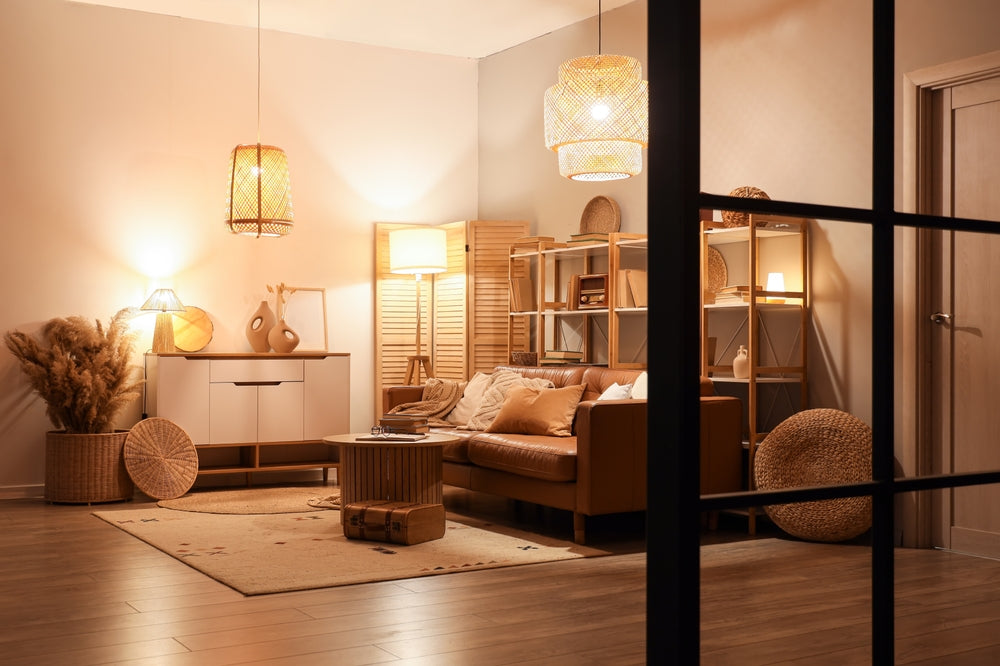
Layering means using several types of light in one space. When the term is first used, it is worth clarifying: layer lighting combines general lighting, task lighting and ambient lighting for stable and easily adaptable results.
General lighting ensures uniform visibility. Task lighting focuses on active surfaces, such as the kitchen counter or desk. Ambient lighting adds depth through indirect or decorative sources.
In the dining area, you can mount a central suspension to illuminate the table and add discreet sconces on the walls. In the evening, use only the ambient lights for a relaxed atmosphere. Dimmers help adjust intensity without changing fixtures.
Neutral color vs. warm; LED vs. other sources
Color temperature influence the way you perceive the space. For the living room and bedroom, in most cases the 2700–3000K range works well, providing a warm and cozy light. In the kitchen, office or work spaces, 3500–4000K brings clarity and helps focus.
LED remains the preferred solution for 2026. It consumes little energy, has a long life and allows precise control. Choose fixtures compatible with dimmable switches or smart systems, especially in rooms used throughout the day.
For example, you can add linear LED under the kitchen cabinets for countertop lighting, a chrome-finish pendant in the dining room, and a reading lamp with warm light next to the sofa. For advanced settings, see the about guide connecting the LED chandeliers to the remote control and the app.
How to coordinate lighting fixtures with color palette and materials?
Materials influence the way light is reflected and diffused:
- wood visually warms the space;
- metal brings contrast;
- the glass amplifies the brightness;
- ceramics provide texture.


In the bedroom, sconces with wooden elements match natural textiles and walls in neutral tones. In the kitchen, a minimalist aluminum ceiling light complements the matte fronts and integrated appliances.
If you prefer a contemporary style, you can introduce chrome accents next to furniture in matte colors. For Scandinavian or Japanese interiors, natural finishes and simple shapes remain a safe choice. In such projects, chandeliers with light bulbs offers flexibility in choosing the light source and a balanced appearance.


Dimensions, heights and installation of lighting fixtures
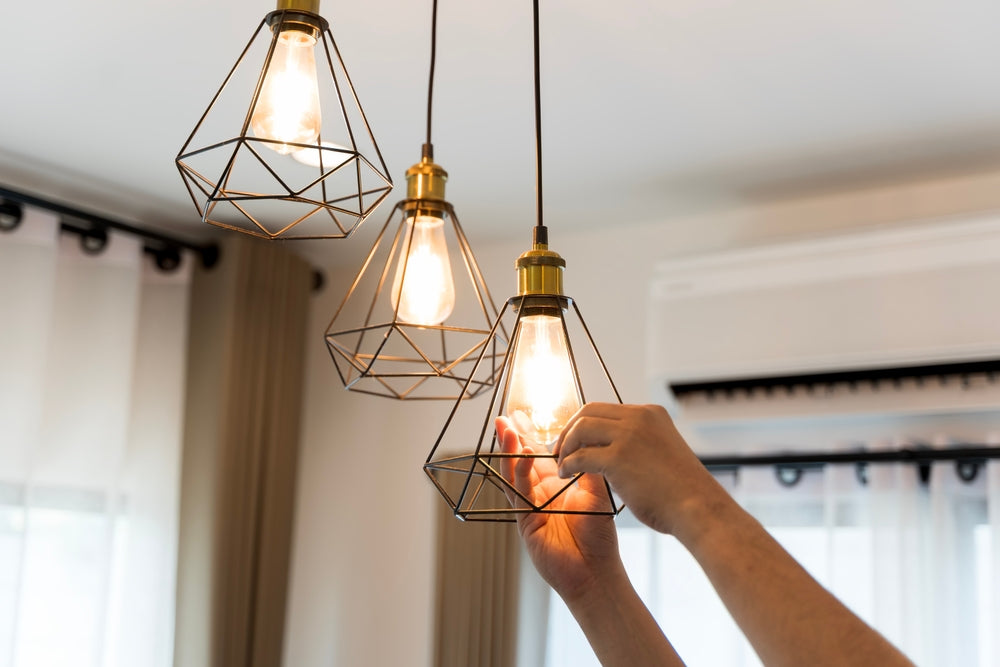
Proportions matter. Above the table, suspend the body about 70–80 cm from the counter. In passing areas, leave enough free space for comfort and safety.
If you mount several identical bodies, keep equal distances for a coherent visual rhythm. Before installation, check the condition of the electrical installation and follow the manufacturer's instructions.
In bathrooms or outdoor spaces, choose fixtures with adequate moisture protection. Guide about protection against environmental factors helps you make the right choice.
Set a budget on the rooms and prioritize lighting fixtures with high visual impact!
In the living room and dining room, it is worth investing in statement fixtures. In hallways, dressing rooms or secondary spaces, choose functional and well-proportioned solutions.
An effective strategy involves phased acquisitions:
1. general lighting;
2. work lighting;
3. decorative accents.
This approach allows you to adjust the budget along the way and test the atmosphere you create.
Lighting for 2026 requires careful planning and coherent choices. Define the purpose of each room, combine lighting in layers, select suitable temperatures and rely on efficient LED solutions. This way you get spaces that are easy to use and visually pleasing.
Discover the collections Alessandro Design and choose the bodies that suit your style. If you want recommendations adapted to your project, explore the available options and request a consultation for a well-balanced arrangement!
About the author