




Walk-in bathroom: inspiration for a clean, relaxing and contemporary design

A well-thought-out walk-in bathroom brings visual clarity, daily comfort and an aesthetic that is easy to adapt over time. If you want to know how you can create a modern, clean, relaxing and contemporary walk-in bathroom with an emphasis on functionality, light and minimalist design, this guide is for you. We offer you recommendations applicable to different spaces, from compact apartment bathrooms to spacious house bathrooms, plus examples of materials, finishes and technical solutions used in current residential projects.
How do you design a walk-in shower in a small bathroom?
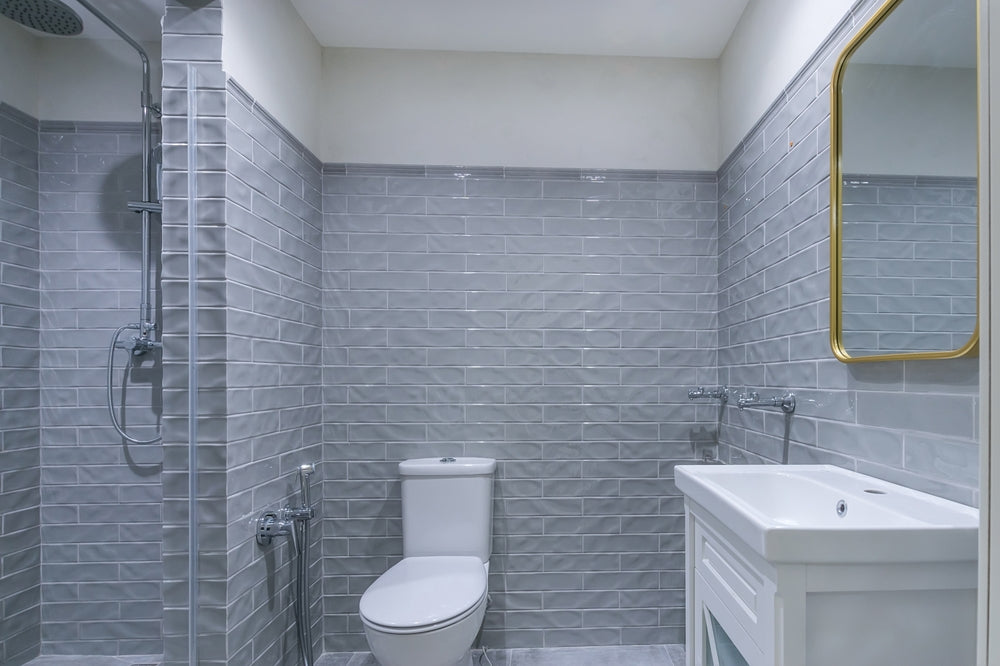
If you want a walk-in shower but think the size of your bathroom is a challenge, the steps below can help you navigate it more easily:
Define the available space and budget for the walk-in shower!
It starts with a realistic assessment of the space. Carefully measure the width, length and height, then mark the positions of the existing fixtures. In most cases, keeping water trails reduces costs and lead time. Decide from the start whether you want minimal intervention or a complete reconfiguration.
Set the budget by chapters: demolitions, installations, finishes, sanitary items, lighting and workmanship. For consistent results, set aside 10–15% for adjustments along the way. Write down the priorities: the size of the shower, the type of glass, the quality of the faucets or the storage solutions.
Choose the color scheme and the materials that you will use to design the bathroom
If you arrange a small bathroom, you must know that the color palette influences the perception of space and the state of comfort. For regular use, neutral colors offer flexibility and hold up well over time. Warm white, sandy beige and light gray reflect light and keep a neat look.
Choose materials suitable for wet environments:
- porcelain and ceramics for walls and floors, easy to clean and water resistant;
- quartz for countertops, with low porosity and good stability;
- treated wood or wood-look ceramic tiles for warm accents without the risk of moisture.
Combine large tiles (60×120 cm or larger) on the walls with a matte finish on the floor. Fewer joints means simpler maintenance and a consistent design. Avoid strong contrasts in small bathrooms; preserve the subtle differences between tones.
Setting up the walk-in shower area!
The minimum recommended size starts from 90×90 cm. For everyday comfort, 120×90 cm or 140×100 cm work better, especially if you choose a shower column with a rain head. Demarcate the area with a fixed, frameless tempered glass screen for an airy look.
Continuous flooring, at the same level as the rest of the bathroom, supports the clean design. Provide a 1–2% slope to the drain and test the drain before plating. Position the gutter next to the wall or under the screen for a discreet design.
Walk-in shower lighting and ventilation
Correct lighting supports functionality and visual comfort. Create layers:
- General lighting with spots protected from moisture.
- Functional lighting in the mirror area, with neutral light.
- Ambient lighting with LED strips in niches or under furniture.
Choose lighting fixtures with degree of protection against environmental factors. Mechanical ventilation reduces condensation and extends the life of finishes. In windowless bathrooms, a silent fan with a humidity sensor helps keep the air dry.
Choose moisture-resistant finishes!
Select finishes designed for wet environments. Epoxy adhesives and grouts provide stability and resist stains. On the floor, choose non-slip surfaces; on the walls, satin or matte finishes keep a neat look.
For a contemporary touch, use an accent wall with textured tiles or a slightly darker, controlled shade. Avoid bathroom-unsuitable paints and water-sensitive materials in the shower area.
Think some storage spaces too!
Well-integrated storage keeps things organized. Niches built into the wall, at eye level, keep products close at hand without visually overloading. Hanging cabinets leave the floor free and make cleaning easier.
For small bathrooms, use compartmentalized drawers and narrow shelves. In large bathrooms, a column cabinet can hide towels and spares while keeping a simple front.
Choose the accessories and design details!
Bathroom accessories define the style. Choose brackets, bars and hooks in finishes that match the batteries. Matte black, brushed chrome or warm bronze suit contemporary design if you use them consistently.
oh LED mirror with defogger improves the daily routine. Mount accessories at ergonomic heights and test positions before final attachment.
Smart and technological elements to include in the bathroom with a walk-in shower
Discreet integration of technology brings additional comfort. Shower thermostats keep the temperature constant, and flow limiter faucets help control consumption. see everything you need to know about sanitary faucets!
If you want better control of the atmosphere, add a dimmer for lighting or an underfloor heating system, according to daily use.
Maintenance and cleaning of the bathroom with walk-in shower
Plan maintenance from the project phase. Smooth surfaces, reduced joints and anti-limescale treated glass reduce cleaning time. Ventilate after showering and quickly wipe water-exposed areas to prevent build-up.
For stable results, use cleaning solutions compatible with your chosen materials and avoid abrasives on sensitive finishes.
Material recommendations for a walk-in shower in a small bathroom
For a coherent and sustainable design, prioritize:
- Porcelain tiles with large wall tiles.
- Non-slip mosaic or matte tiles in the drain area.
- Safety glass of 8–10 mm for screens.
- Quartz countertops for stability and easy maintenance.
Sanitary objects with simple shapes support clean aesthetics. For the shower area, explore faucets and shower columns with recessed mounting, which keeps the walls tidy.
Walk-in shower lighting and ventilation in a small bathroom
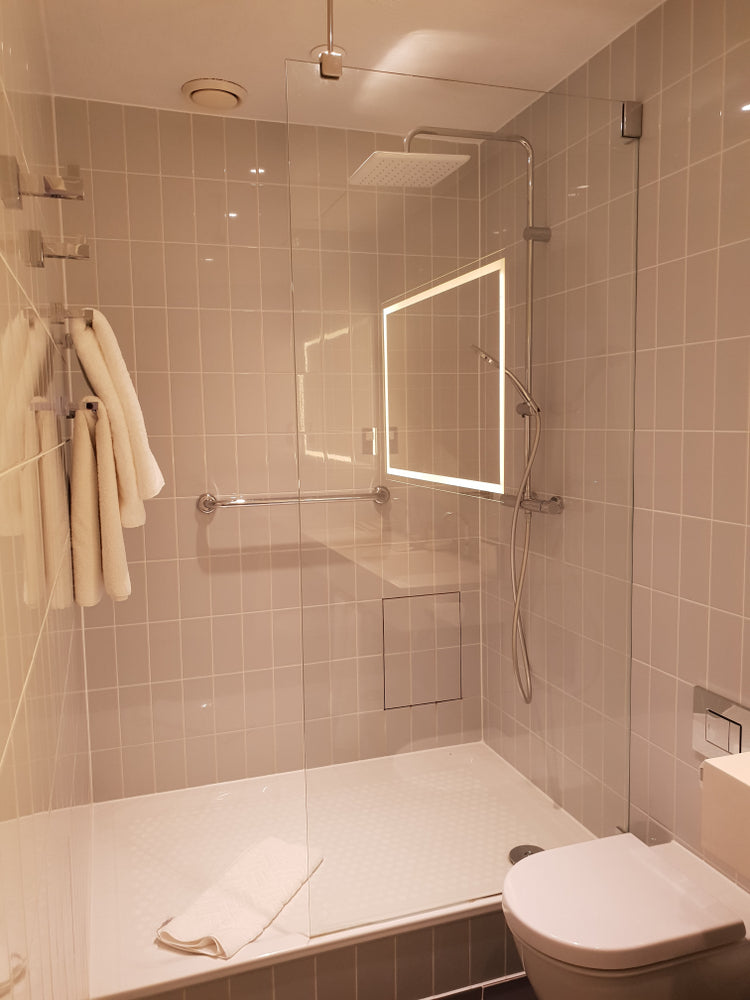
Lighting plays an essential role in a walk-in shower located in a small bathroom, as it influences both the functionality and the perception of the space. It is recommended to use LED lighting fixtures, such as LED ceiling lights or those discreetly integrated into niches, which provide uniform light without visually loading the room. The ideal color temperature is between 3000K and 4000K, warm enough for comfort but neutral enough for good visibility. All light sources in the shower area must have moisture protection for safety and durability.
Ventilation is equally important, especially in a small bathroom, where moisture accumulates quickly. An electric fan, mounted on the ceiling or on the wall, helps to remove steam and prevents the appearance of mold or unpleasant odors. Models with a humidity sensor or timer are a practical solution, as they work automatically and continue to evacuate the air even after the shower is over. Even in windowed bathrooms, mechanical ventilation remains necessary for consistent results.
For an optimal result, lighting and ventilation must be thought of together, right from the design phase. The correct positioning of light sources and the fan, the use of transparent glass to delimit the shower and the choice of light-colored finishes contribute to a more airy and bright space. Such an approach not only improves daily comfort, but also protects the materials in the long term, keeping the bathroom in a good state of use.
A successful walk-in bathroom starts with careful planning and informed choices. Define the space, set the budget, choose the right materials and build an effective lighting plan. For complex projects, talk to an interior designer, create a moodboard and check suppliers' offers before purchasing. Prepare a shopping list and stick to the set schedule.
Frequently asked questions about a walk-in shower in a small bathroom
Does a walk-in shower fit in a small bathroom?
Yes, if you choose transparent screen, continuous flooring and built-in storage.
What type of glass works best?
Clear tempered glass maintains brightness; the smoke variants offer privacy, with a slight reduction in light.
What should I choose for the walk-in shower: gutter or point siphon?
The linear gutter offers a discreet design and flexible installation; point siphon requires extra attention on slopes.
How do you prevent infiltration?
By complete waterproofing in the shower area, tightness test and correct slopes.
About the author