




How to arrange an open space with living and dining: practical and elegant ideas

An open space brings light, freedom of movement and a special pleasure when you want a welcoming and modern home. However, this openness imposes some challenges: how do you organize each area for functionality and style, how do you subtly separate the living room from the dining area, and what details make the difference between a cluttered space and a balanced one? We offer you a guide structured in clear steps, full of furnishing ideas and applied examples to obtain that harmonious open space that represents you and responds to the most refined tastes.
What does an open space mean and what benefits does it bring?
Open space defines a room without solid partitions between several areas, most commonly the living room and the dining room. This configuration amplifies natural light, optically widens the space and contributes to a more connected family life, leaving room for constant communication and interaction.
If you have frequent visitors or organize festive dinners, the open space allows a fluid transition between the relaxation area and the dining area. You can supervise the children while you cook or you can enjoy the conversation with all the guests without isolating yourself. The main objective is the coherent organization, which preserves the identity of each function, but visually links them without breaks or crowding.
The organization of the open space with living and dining: how to delimit efficiently and aesthetically
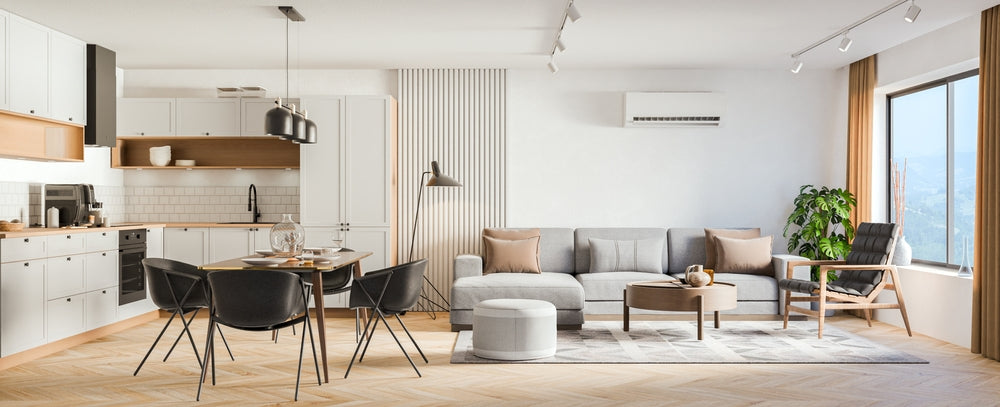
The effective delimitation of the space starts from the assessment of the shape and size of the room. There is no need to mount strict walls or barriers. You can visually separate the areas like this: Use different rugs for the living room and dining room. For example, a fluffy rug under the couch and a flat, easy-to-clean rug under the dining table.
- Changes the flooring in some areas. If you have enough space, you can install parquet in the living area and tiles or marble in the dining area.
- Position the furniture so as to clearly mark the functions. A sofa placed perpendicularly in the middle of the space creates a clear demarcation without the need for a wall. A bookcase or low island can also mark the boundaries between areas.
- Introduce mobile or flexible elements: decorative screens, textile panels or shelves with plants.
For a fluent route between areas of interest, mentally trace the main traffic routes. Leave at least 90 cm between pieces of furniture, so that movement is comfortable. In the dining room, the table and suspended LED chandeliers they become distinct elements as a whole.
The choice of furniture for an open space with living and dining: comfort, functionality and coherent design
Select stylistically coherent furniture with simple lines and quality materials. Modular furniture allows you to reconfigure the space whenever you need. For example, a sofa bed becomes a sleeping place for guests, with the advantage of saving space and flexibility, but some models compromise comfort compared to a fixed sofa – an aspect that is worth testing in the showroom.
For dining, extendable tables are ideal if you often host guests. If space is limited, folding or round tables offer you ingenious solutions. Here are some ideas kitchen layout!
Choose upholstered chairs that bring additional comfort to long tables, but also refined design. Sideboards or showcases with glass doors provide storage space, eliminate visual clutter and at the same time become decorative elements. For small rooms, furnish vertically: tall shelves, narrow consoles or suspended units. This way you save floor space and keep the room airy.
Color palette, materials and textures: set the mood in an open space with living and dining
Neutral colors – white, beige, gray – reflect light and widen the space. If you want accents that give personality, opt for pillows, vases or colorful paintings. The chromatic coherence between the two areas creates a fluid and relaxing effect.
Natural materials – solid wood, glass or stone – bring elegance and the feeling of a refined home. You can add metallic details for modern accents: gold or black handles, frames of LED mirrors or furniture legs.
Choose textiles with different textures: velvet for the sofa, cotton for pillows, ecological leather for chairs or boucle for armchairs. Two or three textures combined are enough for the desired effect, without visually overloading.
Lighting in an open space house with living and dining: layering, technology and ambience
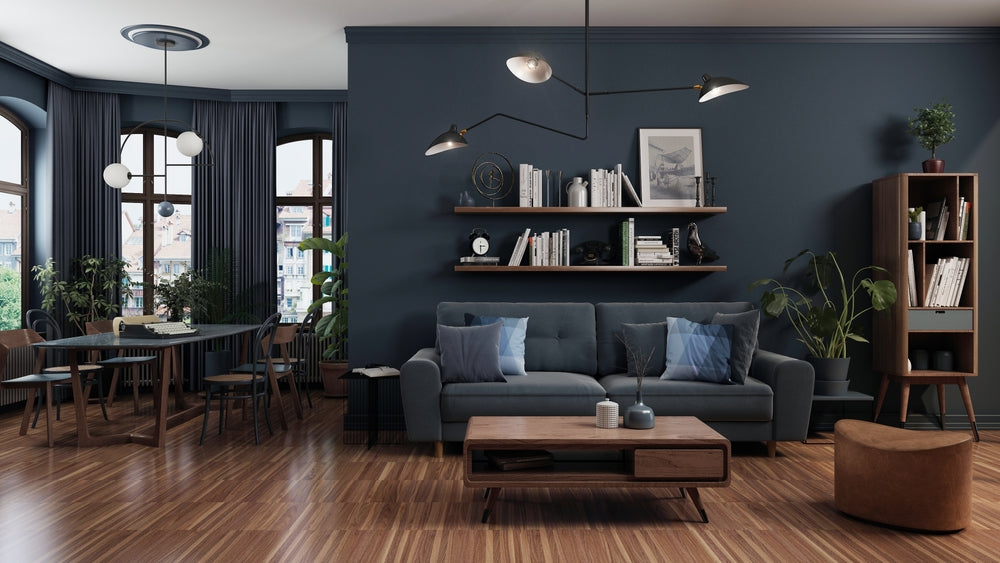
Lighting transforms any open space. Make the most of the large windows, but also of the current technology in lighting fixtures. LED mirrors reflect natural light and provide an effect of space, being technical solutions at the same time.
Lighten on Layers:
1. Choose a LED chandelier with striking design or a chandelier elegant above the dining table.
2. Complete with spots directional, lamppost or LED wall lights modern in the living area to create a relaxing and functional atmosphere.
3. A warm color temperature (2700-3000K) favors socializing, and for work or reading areas you can select neutral light (4000-5000K).
4. For additional visual demarcation, install lighting fixtures with a different design for each area: a sculptural pendant for the dining room and a modern LED chandelier for the living room.
5. A bar between the living room and dining room looks spectacular lit with LED strips or minimalist sconces for discreet accents.
Design styles adapted to an open space with living and dining
Choose a style that reflects your personality and adapt it to the proportions and needs of the house:
1. Modern: modular furniture, simple lines and glass or metal elements; we recommend LED mirrors with illuminated edges for additional visual effect.
2. Scandinavian: lots of white, natural wood and soft textiles, airy curtains, minimalist decor.
3. Classic: furniture with ornamental details, sophisticated chandeliers, rich fabrics and framed mirrors.
4. Updated rustic: solid wood, metal accents, lighting fixtures with industrial influences; here's more about rustic interiors!
5. Minimalist: strictly necessary furniture, airy spaces, monochrome tones, discrete light sources.
Integrate decorative elements with impact, but avoid overloading the space: an expressive painting, a modern mirror, large potted plants or sculptures can emphasize your style without cluttering the room.
How to keep the harmony, order and sustainability of the open space with living and dining
Carefully select the main pieces of furniture and decor, focusing on quality and functionality. Extendable furniture or pieces of furniture on wheels help if you want to rearrange the space quickly. Open shelves keep order, and the organized display of books or decorative elements beautifies the decor.
Periodically evaluate how the family uses the space. Change the arrangement if new requirements arise – for example, the home work area or the children's play corner. For durability, we advise you to opt for easy-to-maintain materials: durable and washable textiles, quality ecological leather, anti-scratch surfaces and long-lasting LED lighting fixtures.
Change decorative accents according to the season – colorful pillows or vases quickly bring freshness and give the feeling of novelty.
A successful open space is built with patience, attention to detail and a clear plan from the beginning. Be creative, personalize every corner, add objects that represent you and don't underestimate the importance of lighting, colors and textures.
About the author